


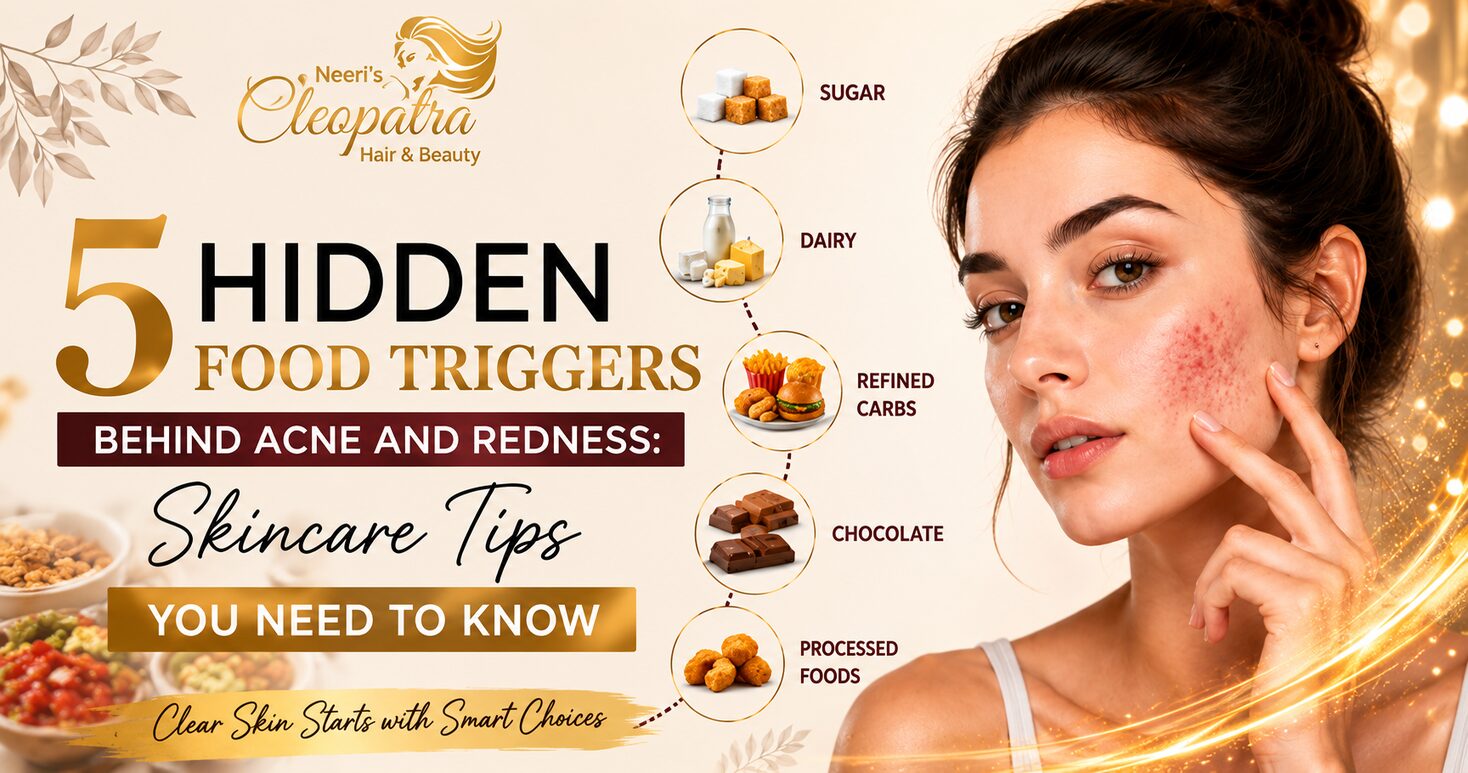
Are you tired of battling stubborn acne and persistent redness despite trying every product on the shelf? The real answer might not be in your bathroom cabinet — it could be hiding on your dinner plate. What you eat has a direct and powerful impact on your skin and certain foods can secretly trigger breakouts and inflammation that no cream or cleanser can fully fix on its own.

At Neeri’s Cleopatra Hair & Beauty, we believe true beauty starts from within. In this blog, we uncover the 5 hidden food triggers behind acne and redness and share expert skincare tips to help you achieve the clear, radiant skin you deserve.
1. Spicy Foods — The Invisible Skin Saboteur
Have you ever noticed your cheeks flushing red or tiny bumps appearing after enjoying a hot curry or chilli-loaded meal? You are not imagining it. Spicy food side effects on skin are very real and are often overlooked by most people.
Spicy foods contain capsaicin, a compound that triggers the release of substance P — a neuropeptide that causes blood vessels to dilate and skin inflammation to spike. This leads to visible redness, flushing and can worsen conditions like rosacea and acne, especially for those with sensitive skin.
When you consume chilli peppers, hot sauces or heavily spiced meals, your body temperature rises temporarily. To cool down, blood rushes to the skin’s surface, causing that familiar red flush. Over time, frequent consumption of spicy foods can chronically inflame the skin, clog pores and break down the skin barrier. Many people also find that spicy food makes me itchy. It is a very real experience — capsaicin activates nerve endings in the skin, causing itchiness and irritation along with the redness.
Expert Tips from Neeri’s Cleopatra Hair & Beauty:
- Keep a food diary and note which meals seem to trigger your flare-ups
- Swap hot spices for anti-inflammatory alternatives like turmeric and ginger
- Drink plenty of water to help cool the body and flush out toxins
- Book a professional skin consultation to get a treatment plan tailored to your skin’s sensitivity
2. Dairy Products — A Hormonal Havoc-Wreaker
Milk, cheese and yoghurt might seem like perfectly healthy additions to your diet, but for many people, dairy is one of the biggest hidden acne triggers. Cow’s milk naturally contains hormones that can stimulate your oil glands and clog your pores — even organic varieties are not exempt from this.
Dairy also raises insulin-like growth factor 1 (IGF-1), which promotes excess skin cell growth and sebum production. This creates the perfect environment for breakouts to thrive.
Signs that dairy might be your skin trigger:
- Acne concentrated around the chin and jawline
- Persistent whiteheads or deep cystic pimples
- Breakouts that seem to worsen after milky drinks, cheese or desserts
What you can do:
Try eliminating dairy completely for 4 to 6 weeks and observe how your skin responds. Switch to plant-based alternatives like oat milk, almond milk or coconut milk. If your skin improves significantly, dairy is likely your culprit. Pair your dietary changes with our professional face beauty treatments in Watergardens at Neeri’s Cleopatra Hair & Beauty to accelerate skin healing and restore your natural glow faster.
3. High-Glycemic Foods — Sugar’s Secret Attack on Your Skin
White bread, sugary cereals, pastries, biscuits, fizzy drinks — these high-glycemic index foods cause a rapid spike in blood sugar. That spike triggers a surge in insulin, which increases androgen activity in the skin, leading to excess oil production and clogged pores that eventually lead to breakouts.
Research in dermatology has consistently shown that people who eat high-GI diets have a significantly higher rate of acne compared to those who follow low-GI diets. The inflammation caused by blood sugar spikes also shows up as redness and uneven skin tone on the face.
The sugar and skin cycle:
Blood sugar spikes → insulin surges → oil glands go into overdrive → pores get clogged → bacteria multiply → acne appears
This cycle begins long before a pimple ever shows up on your face, which is why diet changes take a few weeks to show visible results.
Simple swaps to protect your skin:
- Replace white rice with brown rice
- Choose wholegrain bread over white bread
- Swap sugary snacks for fresh fruits, nuts and seeds
- Cut down on fizzy drinks and replace them with infused water or herbal teas
4. Alcohol — Dehydration in a Glass
A glass of wine at dinner or cocktails on a night out might seem harmless, but alcohol is one of the most underrated skin saboteurs. Alcohol is a diuretic, meaning it dehydrates your skin from the inside out, stripping it of essential moisture and vital nutrients.
Alcohol also disrupts sleep quality, interferes with your liver’s natural detoxification process, and causes widespread inflammation throughout the body. All of these factors directly contribute to dull skin, enlarged pores, persistent redness and increased breakouts. Whisky, beer and sugary cocktails are especially harsh due to their highly inflammatory properties.
How alcohol affects your skin:
- Short-term effects: flushing, puffiness, redness and a tired-looking complexion
- Long-term effects: premature ageing, persistent redness, broken capillaries and stubborn acne
Limit alcohol to special occasions, always hydrate well between drinks and maintain a consistent skincare routine. If alcohol-related skin damage is a concern for you, our skin treatment in Watergardens at Neeri’s Cleopatra Hair & Beauty can help repair and rejuvenate your complexion using the latest professional techniques and premium skincare products.
5. Processed and Fast Foods — Inflammation on a Plate
Burgers, chips, packaged snacks, instant noodles — processed and fast foods are packed with refined sugars, trans fats, artificial additives and excessive salt. These ingredients are a recipe for skin disaster. Trans fats and refined oils trigger systemic inflammation throughout the body, which often shows up on your face as acne, redness and heightened skin sensitivity.
The high sodium content in processed foods also causes water retention, leaving your skin looking puffy and dull. Artificial preservatives and flavour enhancers disrupt your gut health, and since your gut and skin are closely connected through the gut-skin axis, poor gut health almost always reflects on your face.
The gut and skin connection:
A disrupted gut microbiome leads to increased intestinal permeability, commonly known as leaky gut. This allows toxins to enter the bloodstream and your immune system reacts with inflammation — and your skin bears the visible consequences of that reaction.
Quick wins to improve your skin through better eating:
- Eat a wide variety of colourful fruits and vegetables rich in antioxidants
- Include omega-3 fatty acids through salmon, walnuts and flaxseeds to fight inflammation
- Drink 8 to 10 glasses of water every day
- Reduce caffeine and replace it with chamomile or green tea
- Add zinc-rich foods like pumpkin seeds and legumes to your diet — zinc is proven to help combat acne
READ MORE – 5 Foods You Didn’t Know Could Cause Skin Irritations
Bonus Skincare Tips to Complement Your Diet
Dietary changes work best when paired with a consistent and professional skincare routine. Here is what our experts at Neeri’s Cleopatra Hair & Beauty recommend:
- Double cleanse every evening to remove makeup, SPF and daily buildup thoroughly
- Use non-comedogenic products that are specifically formulated not to block pores
- Apply SPF every single day because UV exposure worsens inflammation and hyperpigmentation
- Book professional treatments such as facials, chemical peels and LED therapy to speed up skin healing
- Get a personalised skin analysis so your treatment targets your exact skin concerns rather than guessing

At the Best Beauty Salon Watergardens, Neeri’s Cleopatra Hair & Beauty offers a full range of services including deep cleansing facials, acne management therapies, anti-redness treatments and customised skin rejuvenation packages — all designed specifically for your skin type.
Conclusion
Your skin is a direct reflection of what is happening inside your body. Spicy foods, dairy, sugar-rich snacks, alcohol and processed foods can all secretly fuel acne and redness — even when your skincare routine is doing everything right. Understanding the spicy food side effects on skin, along with other dietary triggers, can help you make better choices for clearer and healthier skin. By identifying your personal food triggers and making smarter dietary changes, you give your skin the strongest possible foundation to heal and glow.
But diet is only one part of the equation. Professional skin treatments are what truly accelerate transformation. Whether you are dealing with persistent acne, stubborn redness, or a dull complexion, our expert therapists at Neeri’s Cleopatra Hair & Beauty are ready to create a treatment plan just for you. The combination of mindful eating and expert professional care is the most powerful path to the clear, healthy, radiant skin you have always wanted.
Book your skin consultation today at Neeri’s Cleopatra Hair & Beauty, Watergardens